
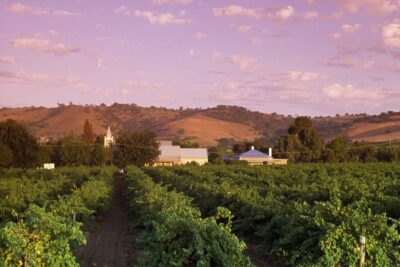
History of Wine-Making in Australia
Australia is probably one of the most fascinating countries on the planet. First, the earth’s oldest continental crust of 4.4 billion years and cyanobacteria, the oldest fossil to have ever been found dated 3.5 billion years, are found here. Second, it is the 6th largest country in the world in terms of land mass, yet, approximately 40% of it is downright uninhabitable due to being extremely arid. Third, the Australian Alps get a lot more snowfall than Switzerland which is known for its snow-related tourist attractions. And the list goes on.
Australia ranks high in terms of overall quality of life among all the nations worldwide and is rich with great tourist destinations, especially with its abundant flora and fauna, majestic beaches, the remarkable Great Barrier Reef, and grand structures and architecture like the Sydney Opera House. Despite all of these, it wasn’t on everyone’s top-of-the-list tourist destinations, being actually just the 40th most visited country in the world.
However, with the booming industry of wine, with the country being considered one of the largest exporters of wine in the world and a major contributor to the economy, with over 100 grape varieties grown and produced across the 65 wine regions, it is bound to change the landscape of tourism in the land down under in the days to come.
When and Where It All Started
Winemaking in Australia was first documented in 1788 when a British Royal Navy officer named Arthur Phillip who was the Colony of New South Wales’ first governor brought the very first vines to Sydney. These cuttings came from Cape of Good Hope in South Africa, which he planted in the Sydney Botanical Gardens, or formerly known as Farm Cove.
By 1833, the viticulturist James Busby kickstarted the growth and production of wine in Australia when he brought different varieties of grape cuttings to the country from Spain and France. These were Shiraz or Syrah and Grenache.
The industry had expanded in the 1890s. This was brought about by more land areas being planted with grapevines, especially along the irrigated parts of Southern Australia. Some of these include Riverland in South Australia and Rutherglen in Victoria which were planted with Muscadelle, Grenache, Palomino, and Shiraz which was then known as Hermitage.
Transition From Fortified Wines to Table Wines
At first, wines that were sweet and fortified or the ones with added distilled spirit were produced. Typically, it was brandy that was used as an additive, but it could be anything that is considered a neutral spirit like those distilled from grapes, sugar, or grains. Since Australia only had a small population then, their only way to keep the industry afloat was to export their produce to Great Britain.
However, during those times, the Brits didn’t consume much table wine as they preferred the sherries from Spain and the sweet ports from Portugal. The Australian wine industry had to make do with the situation and the planting and production relied heavily on this level of demand until the 1950s.
Yields that used to be intended for artisanal products were eventually farmed to produce maximum yields, which in turn made the production of fortified wine highly mechanised and commercialised. Sad to say, this eventually led to the quality of the product being compromised. By the 1960s, the demand eventually had a full stop. As a result, fortified wine production plummeted from 85% of the total wine production, down to a measly 30% within a decade.
The country saw the focus finally shift to the typical table wines in the 1960s. From then on, the wine-making industry had become livelier as the production of different varieties of grapes and eventually, wines, intensified.
The heritage of the Orange wine region of New South Wales spans back to the 19th century. However, it wasn’t until around the 1980s that things started to really work out for the better. From then on, it developed to having 60 wineries that produced world-class wines.
Fast Forward – 2000 to 2010
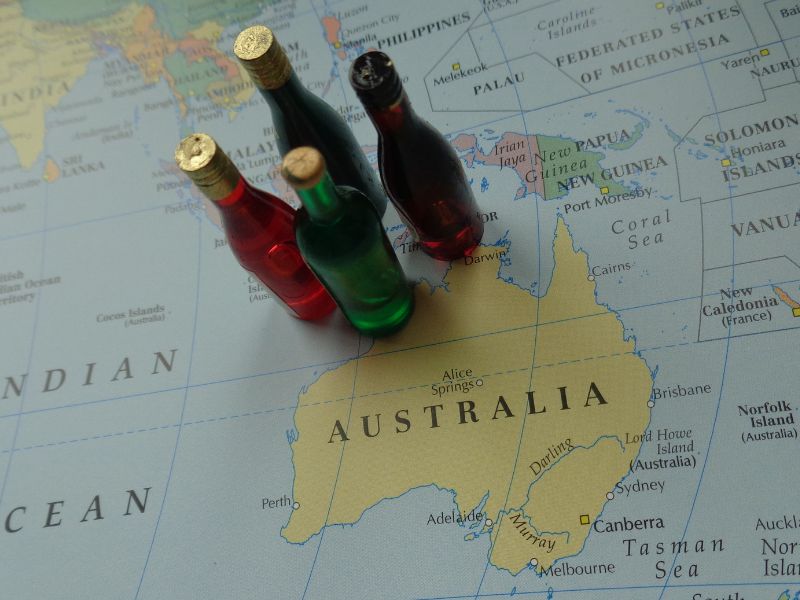
In the 2000s, despite the seeming obsolescence of fortified wine, the vessels that used to house the liquor had a surge in demand. This is because these cherry casks play a very vital role in the proper maturation of whisky. In some cases, the barrels are more valuable than the contents themselves.
Things began to look very promising when the exports of Australian wine reached their peak globally in 2007 at A$950 million.
By 2010, Australia finally conceded and stopped calling its fortified wine “sherry” which originally was the name of a Jerez, Spain’s wine variety. Instead, it was replaced by the name “apera” but it had failed miserably in having a recall among the older generations.
Perhaps, for old times’ sake and for keeping the history intact plus a relatively significant number of patrons, some old producers are still actively making fortified wines to this day. After all, being part of the good old days deserves some form of respect despite the fact that its actual glory times had all been gone. Also, their age, style, complexity, and origin can still elicit curiosity and can still draw some interest in bars, intrigued tourists, or they can even be a collector’s item for your home cellar.
Additionally, there emerged a new generation of winemakers who were keen on experimenting with the products. Most of these explored the artisan production, as well as the organic varieties.